Living in a small space is common in Australia. You might be in a trendy Melbourne apartment, a sunny Brisbane flat, or a charming older home. We all want our homes to feel open and airy, not cramped and closed in. The good news is you can use smart design tricks to create the feeling of more space without any construction. It is all about guiding the eye and making smart choices.
Here are some simple methods to help your compact rooms look and feel wonderfully larger.
1. Choose Light to Reflect the Beauty of Your Space
Australia is famous for its beautiful natural light. Your mission is to welcome as much of it inside as you can. Start with your windows. Avoid heavy, dark curtains that block the view and the light. Instead, choose lightweight fabrics like linen or cotton in soft colours. Hang your curtain rod high above the window frame and make sure it is wide enough so that when the curtains are open, they do not cover the glass at all. This makes your window look like a large, bright portal.
In addition, you must embrace the power of mirrors. This is because a mirror is like a magic tool for interior design. When you place a large mirror on a wall opposite a window, it does something wonderful. It catches the sunlight and throws it back into the room, making everything feel brighter and more open. It also reflects the view, giving the illusion of another window.
Therefore, do not be afraid to use mirrors in creative places. A mirrored panel behind a shelf or a large leaning floor mirror in a corner can work miracles in a small living room or bedroom.
2. Choose a Light, Cohesive Colour
Colour has a powerful effect on how we see a space. While dark colours on walls make them feel like they are moving closer to you, light colours make walls seem to step back, creating a feeling of airiness. For a small room, the safest and most effective approach is to paint your walls and ceiling the same light colour. This could be a crisp white, a soft cream, a very pale grey, or a gentle dusty blue. When the wall and ceiling colours match, the line where they meet becomes less obvious. This tricks your eye into seeing more height.
You can imagine your colour scheme like a recipe. A great guideline is the sixty-thirty-ten rule.
Sixty percent of the room should be your main light colour, covering the walls, big furniture, and maybe a rug. Thirty percent can be a secondary colour for items like your sofa, curtains, or bedspread. The final ten percent is for small accents like throw pillows, artwork, or a decorative lamp. This formula keeps the room feeling calm, connected, and spacious, not busy and broken up.
3. Choose Furniture That Fits the Size of Your Room
One of the biggest mistakes in a small room is filling it with furniture that is too large. A huge, overstuffed sofa can swallow a tiny living room. The key is to select pieces that fit the scale of your space. Look for sofas and chairs with visible legs. When you can see the floor underneath your furniture, it creates a sense of flow and openness. This also allows light to travel across the floor, which makes the room feel bigger.
4. Create Zones in Open Plan Areas
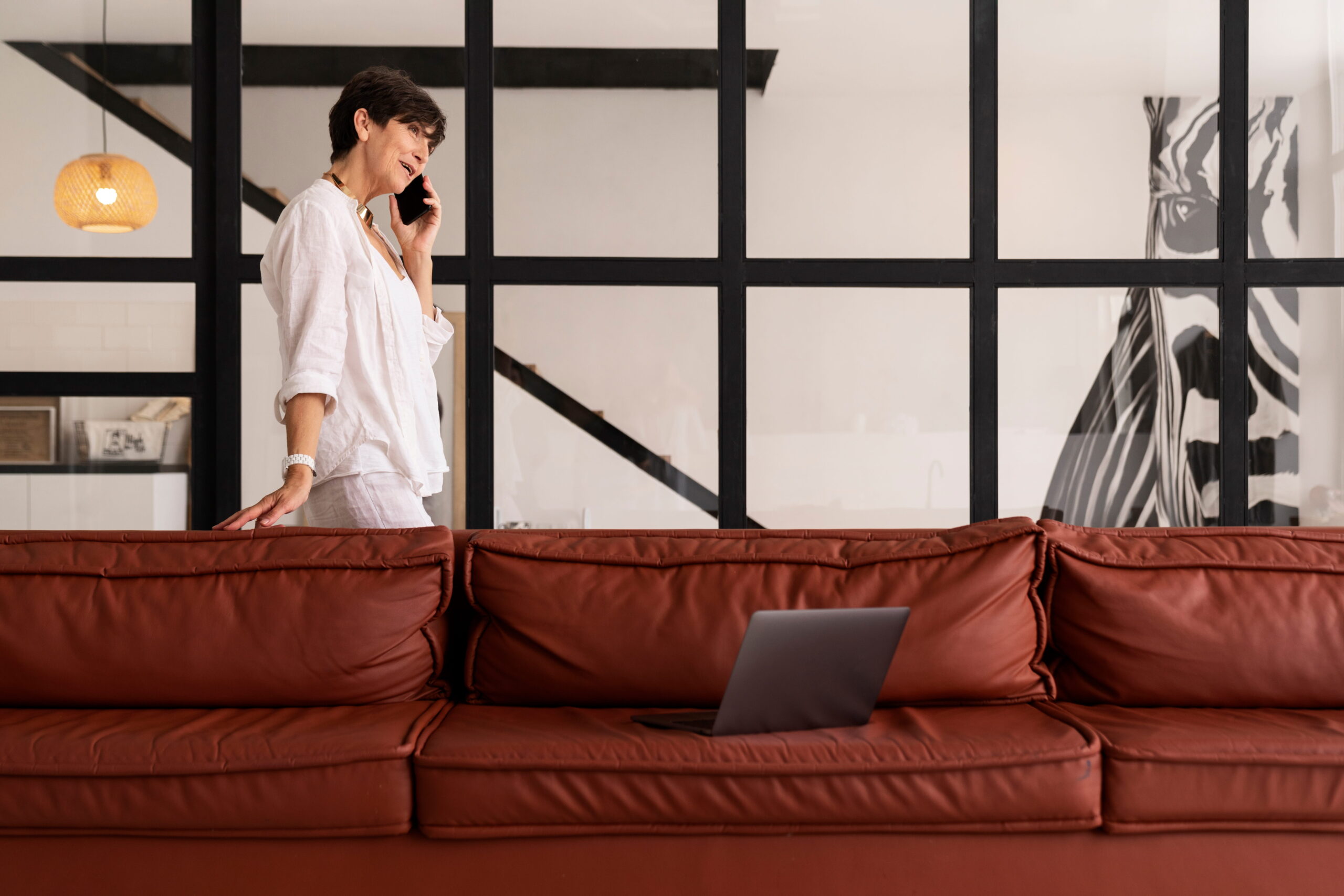
Many Australian homes have open-plan living. Without walls, you need to show where one area ends and another begins. You can do this by creating visual zones. You can use a large area rug to define the living room space, as we just discussed. Your furniture placement can also help. Positioning your sofa so its back faces the dining area naturally creates a gentle boundary between the two spaces.
Lighting is another excellent tool for zoning. A pendant light hanging low over your dining table clearly marks that spot as the eating area. Meanwhile, a floor lamp next to your sofa defines the lounge area. You can also use a low, open bookshelf as a room divider. It provides some separation but still allows light and sightlines to pass through, keeping the open feeling alive.
5. Declutter to Have a Well Organised Space
Clutter is the enemy of a small space. Every item left out on a counter, table, or floor adds visual noise and makes a room feel crowded and smaller. The goal is to create a sense of calm order. Make sure everything has a proper home. Use beautiful baskets, decorative boxes, and drawer organisers to keep daily items out of sight. Look for furniture with built-in storage, like a bed with drawers underneath or a coffee table with a shelf.
Also, make use of your vertical space. Walls are valuable real estate in a small home. Install floating shelves to display a few special items and keep surfaces clear. Consider storage solutions that go right up to the ceiling. Keeping your space tidy and organised is not about having nothing; it is about having a place for everything. A clear floor and clean surfaces make any room feel instantly larger and more peaceful.
Conclusion
Your space can look beautiful, tidy, and cozy if you take the right steps in achieving that. By following the ideas highlighted in this article, you can transform your compact Australian home. Remember, it is not about the actual square metres. It is about creating a feeling. A feeling of light, of calm, of space to breathe. With thoughtful choices, you can turn any small room into a comfortable, stylish, and surprisingly spacious sanctuary.